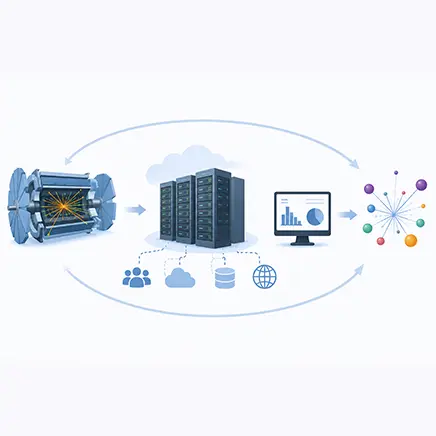
We provide a major fraction of the ATLAS computing resources in Spain and develop advanced solutions for distributed computing, simulation, and large scale data processing.
TIER2/3, HPCs, etc
The primary objective of the Spanish ATLAS Tier 2 is to deliver the computing resources committed to the ATLAS collaboration each year. The overall efficiency of the Tier 2 has remained close to 100 percent. The IFIC Tier 2 provides about 60 percent of the ATLAS computing resources in Spain and approximately 3 percent of the total resources of the ATLAS collaboration. Beyond resource delivery, additional goals include activities related to distributed computing and improvements in the performance of physics analysis workflows.
Our group has continued the exploitation of the MareNostrum 4 supercomputer at the Barcelona Supercomputing Center for ATLAS Monte Carlo production. A dedicated ARC Computing Element was configured to interface with the HPC login and transfer nodes via secure connections. Through national agreements and competitive calls, more than 12 million CPU hours were delivered, producing over 300 million fully simulated events. Approximately 50 percent of the Spanish simulation production is executed on MareNostrum 5 resources, representing about 30 percent of IFIC contributions to ATLAS computing.
EVENT INDEX
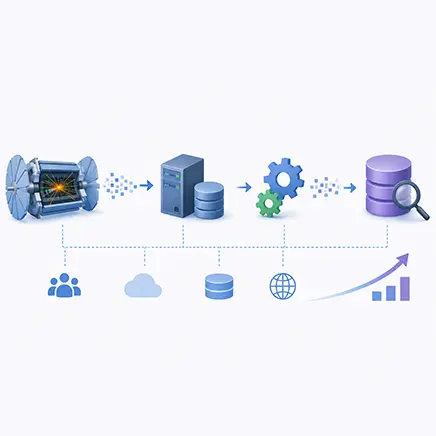
The group has continued its responsibilities within the ATLAS Event Index project, where we are in charge of Data Collection and Data Production. We are currently developing and testing a new Event Index based on HBase and Phoenix technologies. This new system is designed to surpass the current implementation by optimizing the event key structure, thereby improving data storage efficiency and significantly enhancing performance for the most common use cases.
In addition, the new architecture introduces greater granularity and flexibility compared to the existing system. These improvements are essential to meet the demanding data generation requirements of Run 3 and to cope with the increased data taking rate, expected to grow by more than a factor of five. A central focus of our work has been the implementation of advanced storage technologies capable of handling the high speed ingestion and storage of very large data volumes while maintaining reliability and scalability.
Carrer del Catedrátic José Beltrán Martinez, 2
46980 Paterna, Valencia